


Neuroscience in Space Medicine
Written by: Vee Nguyen
Edited by: Fahad Hassan Shah

Introduction
Space may seem exciting, but for the brain, it is a place of constant danger. In microgravity (a state in which objects appear to be weightless), fluids shift upward, increasing pressure in the head, which affects astronauts’ vision during long missions. Being in a closed environment for months also disrupts sleep cycles and adds constant stress, which can impact focus and reaction time. Because of this, space medicine has to track brain function, not just physical health, closely. Neuroscience combined with neurotechnology and biomedical engineering allows researchers to see how microgravity and isolation change brain structure and function in real time and to develop tools that can prevent cognitive decline and manage stress. This helps astronauts stay alert and make critical decisions during long missions. It also provides insights that could improve treatments for conditions such as brain swelling, sleep disorders, and mental health challenges on Earth.

Figure 1. Comparison of fluid distribution and eye shape on Earth versus in space.
The Brain in Space: Why Neuroscience Matters
Microgravity induces physical alterations in the brain’s spatial orientation and internal conditions. In the absence of gravity, bodily fluids cease their downward settling. Consequently, blood and cerebrospinal fluid are redistributed toward the head, a phenomenon termed a cephalad fluid shift, which can subsequently affect the drainage of blood from the brain and eyes (NASA Fluid Shifts Study, 2015). These fluid shifts are associated with Spaceflight Associated Neuro-Ocular Syndrome (SANS), a condition in which astronauts experience swelling at the posterior aspect of the eye, alterations in the eyeball’s shape, and modifications in the optic nerve’s structure. These changes can impact vision both during and following space missions (Risk of Spaceflight Associated Neuro-Ocular Syndrome (SANS) - NASA, 2024).

Figure 2. MRI scans showing different views of the brain to monitor how spaceflight affects brain structure.
Neuroscience research has also shown that the brain itself does not stay in the same spot inside the skull after being in space. Magnetic resonance imaging (MRI) scans conducted pre- and post-flight demonstrate that the brain frequently experiences upward and backward displacement within the cranial cavity following prolonged space missions, with the most pronounced movement occurring in sensory and motor areas implicated in equilibrium and locomotion (Wang et al., 2026). These observed shifts are associated with the balance difficulties encountered by astronauts upon their return, thereby indicating that alterations in neural structure can manifest as tangible behavioral consequences. Seeing how changes unfold, and not assuming they are harmless, is exactly why neuroscience matters in space medicine: if the brain’s neural circuits and fluid dynamics are altered during a mission, that can impact an astronaut’s ability to perform complex tasks reliably.
Without understanding these specific neural responses, we would only see the symptoms—blurry vision, balance problems, cognitive strain—without knowing what is causing them or how to prevent them. In this context, neuroscience provides the evidence and measurements needed to develop monitoring tools and countermeasures that protect brain health on long-duration missions and inform medical care back on Earth.
Neurotechnology in Space Medicine
Neurotechnology allows researchers to monitor brain activity during spaceflight so that subtle neural changes can be detected before they impair performance. Electroencephalography (EEG) records electrical signals from the cortex and provides real-time insight into brain function. Flight surgeons can detect early signs of fatigue, stress, or cognitive decline and intervene before these issues affect mission-critical tasks (Dinatolo & Cohen, 2022). Portable EEG sensors and wearable headbands record neural activity throughout daily routines in microgravity. These recordings show how long-duration exposure to cephalad fluid shifts, disrupted sleep cycles, and prolonged isolation alter cortical connectivity and executive function. The technology measures precise patterns of neural change rather than only noting generalized symptoms.
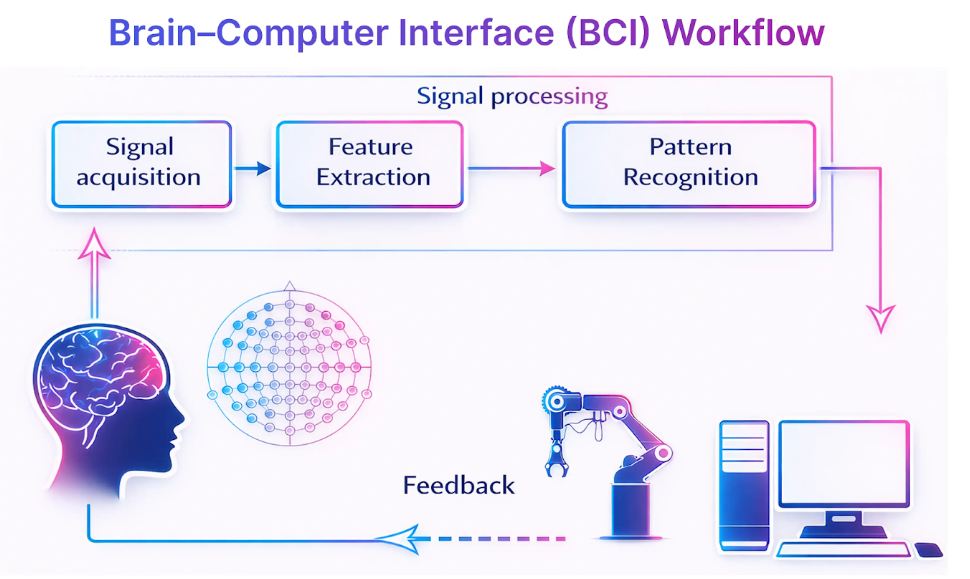
Figure 3. Diagram of the closed-loop Brain-Computer Interface (BCI) workflow.
Brain-computer interfaces (BCIs) extend this monitoring by translating neural signals into control commands that assist astronauts when cognitive performance decreases. For example, BCIs convert cortical activity into inputs for devices or software and reduce mental effort during complex operations (Li et al., 2025). On long missions, where immediate medical support is not available, these systems remain essential for managing neurological risks. Engineers design BCIs to function reliably in spacecraft environments and maintain monitoring without adding cognitive or physical strain to the crew.
Neurotechnology enables clinicians to detect nuanced changes in neural activity before performance declines, rather than waiting for obvious signs such as disorientation or memory lapses. Flight teams can adjust task order, rest periods, or workload so that cognitive fatigue stays low and executive function remains intact. These measurements also apply to Earth-based challenges, such as tracking recovery after traumatic brain injury, evaluating cognitive performance under high-stress conditions, and supporting mental resilience in isolated or demanding environments.

Figure 4. Astronaut Ali AlQarni is wearing the Smarting PRO EEG system during the Axiom Mission 2 to monitor brain activity changes in space.
Role of Biomedical Engineering
Biomedical engineering turns neurotechnology into tools that astronauts can actually use. Devices cannot be bulky or fragile, so engineers create systems that are small, sturdy, and able to work in microgravity. EEG systems, for example, have to be wearable while still recording accurate cortical signals, even as fluid shifts and body movements affect neural activity (Wang et al., 2026). If these systems are too large or delicate, continuous brain monitoring over long missions would not be possible.
Engineering also determines how neural data is processed and applied. Sensors pick up electrical activity from the brain, and onboard systems process it in real time. Flight surgeons use this information to see early signs of fatigue, stress, or cognitive decline. Teams can then change tasks or schedules before performance is affected. Without immediate processing, the signals would have little operational value.
Spacecraft conditions limit what engineers can build. Power is limited, storage is small, and repairs are hard during a mission. Devices have to keep working for weeks or months without being adjusted. Engineers must design the devices to be accurate, consistent, and non-invasive to allow continuous monitoring of astronauts’ brain activity in isolated conditions (NASA Fluid Shifts Study, 2015).
Future Directions in Space Medicine
Artificial intelligence and neurotechnology facilitate the monitoring of brain activity during spaceflight. EEG and related sensors capture neural signals, thereby enabling the detection of alterations in attention, stress levels, or decision-making processes before they impact task performance (Tu et al., 2022). Consequently, flight surgeons can utilize this data to modulate workloads and implement interventions, thereby optimizing astronaut performance throughout extended missions.
Because each astronaut reacts differently to microgravity, fluid shifts, and isolation, any interventions must be tailored to the individual (Schmidt & Goodwin, 2013). Neural measurements from flight help adjust workloads, rest schedules, and cognitive support. Personalized strategies maintain performance and reduce the risk of errors in critical situations.
For deep-space missions, autonomous systems will be important. Devices that monitor brain activity and act without constant Earth guidance allow crews to manage neurological risks despite communication delays (Dinatolo & Cohen, 2022). These systems maintain cognitive function, preserve neural stability, and allow astronauts to manage issues without direct external support.
The tools and approaches developed for space also have uses on Earth. Continuous neural monitoring and tailored interventions could improve care for patients with brain injuries, neurodegenerative conditions, or cognitive strain in high-stress or isolated settings (Dinatolo & Cohen, 2022; Tu et al., 2022). Space provides a controlled way to study how the brain adapts and recovers, which informs treatments and cognitive support strategies on Earth.
Broader Applications Beyond Space
Spaceflight research offers valuable insights for neurological care on Earth. Investigations into the effects of microgravity on brain structure, fluid distribution, and neural functions provide a basis for studying neurodegenerative diseases like Alzheimer’s and Parkinson’s, which exhibit analogous patterns of neural degeneration and structural alteration over time (Roberts et al., 2017).
Neurotechnology developed for astronauts can also be applied to mental health monitoring. Continuous monitoring of neural activity enables clinicians to identify specific shifts in attention, working memory, and emotional control caused by prolonged stress or isolation (Mhatre et al., 2022). Early detection helps guide interventions that protect mental health and maintain effective decision-making in challenging conditions. This type of monitoring supports earlier interventions and more consistent management of neurological and psychological conditions.
In this context, space functions as an extreme model for studying the brain. Microgravity, isolation, and disrupted circadian rhythms produce measurable neural changes within a short time frame. These conditions let researchers measure how the brain adapts, reorganizes neural pathways, and maintains function under prolonged stress, offering a controlled model of plasticity that is difficult to replicate on Earth.
Conclusion
Neuroscience helps explain how long-duration spaceflight changes brain function and cognitive performance. In practice, it works alongside biomedical engineering and neurotechnology to track neural activity and guide responses when performance starts to decline. This approach makes it possible to pick up small changes in cortical function that would otherwise go unnoticed. What is learned from these missions supports astronaut safety during flight and also shapes how future crews will manage brain health on their own. Over time, these methods may extend beyond space and influence how neurological conditions are monitored and treated on Earth.
References
Dinatolo, M. F., & Cohen, L. Y. (2022). Monitoring the Impact of Spaceflight on the Human
Brain. Life (Basel, Switzerland), 12(7), 1060. https://doi.org/10.3390/life12071060
Li, T., Gao, Y., Zhou, J., Chen, Y., Zhang, S., & Liu, Y. (2025). Advancements in the application
of brain-computer interfaces based on different paradigms in amyotrophic lateral
sclerosis. Frontiers in Neuroscience, 19. https://doi.org/10.3389/fnins.2025.1658315
Mhatre, S. D., Iyer, J., Puukila, S., Paul, A. M., Tahimic, C. G. T., Rubinstein, L., Lowe, M.,
Alwood, J. S., Sowa, M. B., Bhattacharya, S., Globus, R. K., & Ronca, A. E. (2022).
Neuro-consequences of the spaceflight environment. Neuroscience & Biobehavioral
Reviews, 132, 908–935. https://doi.org/10.1016/j.neubiorev.2021.09.055
NASA Fluid Shifts Study Advances Journey to Mars - NASA. (2015, July 20). NASA.
Risk of Spaceflight Associated Neuro-ocular Syndrome (SANS) - NASA. (2024, October 23).
ome-sans/
Roberts, D. R., Albrecht, M. H., Collins, H. R., Asemani, D., Chatterjee, A. R., Spampinato, M.
V., Zhu, X., Chimowitz, M. I., & Antonucci, M. U. (2017). Effects of Spaceflight on
Astronaut Brain Structure as Indicated on MRI. New England Journal of Medicine,
377(18), 1746–1753. https://doi.org/10.1056/nejmoa1705129
Schmidt, M. A., & Goodwin, T. J. (2013). Personalized medicine in human space flight: using
Omics based analyses to develop individualized countermeasures that enhance astronaut
safety and performance. Metabolomics, 9(6), 1134–1156.
Svitlyk, Y. (2026, April 27). What Happens to Astronauts’ Brains in Space? Root Nation. https://root-nation.com/en/articles-en/analytics-en/en-what-happens-to-stronauts-brains-in-space/
Tu, D., Basner, M., Smith, M. G., Williams, E. S., Ryder, V. E., Romoser, A. A., Ecker, A.,
Aeschbach, D., Stahn, A. C., Jones, C. W., Howard, K., Kaizi-Lutu, M., Dinges, D. F., &
Shou, H. (2022). Dynamic ensemble prediction of cognitive performance in spaceflight.
Scientific Reports, 12(1). https://doi.org/10.1038/s41598-022-14456-8
Wang, T., Odor, R. J., De, E., Mulder, E., Bloomberg, J. J., Wood, S. J., & Seidler, R. D. (2026).
Brain displacement and nonlinear deformation following human spaceflight. Proceedings
of the National Academy of Sciences, 123(3), e2505682122–e2505682122.


Comments