


Combatting Insomnia
Written by: Deepika Miryala
Edited by: Aylin Abbasi
Abstract
As sleep science advances, researchers are beginning to delve into the world of sleep disorders. Insomnia is a particularly prevalent condition that encompasses an impaired ability to get a good night’s sleep, leading to numerous negative health outcomes. Fortunately, many of the risk factors, causes, and consequences of this disorder have been identified. Additionally, numerous studies have been conducted to understand the secondary effects of this type of sleep deprivation. This research has allowed experts to curate recommendations that involve medications and medical interventions. But beyond just clinical solutions, lifestyle modifications and at-home routines may also act as barriers and useful protective measures against insomnia symptoms. However, these strategies have shown varying degrees of success, and the medications have been associated with unpleasant side effects. While insomnia is a multifaceted disorder that is difficult to pinpoint, the growing body of knowledge surrounding it helps shed light on future research and possible remedies.
Introduction: What is Insomnia?
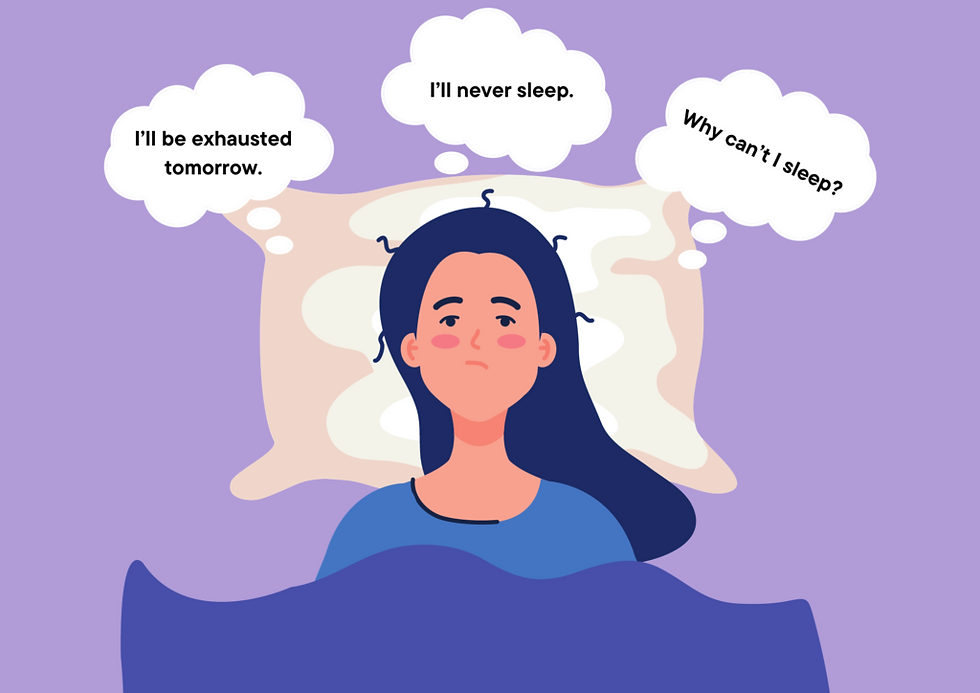
Insomnia is a common sleep disorder characterized by difficulty sleeping, particularly difficulty falling asleep and staying asleep (Mayo Clinic, 2024). As a result, those diagnosed with insomnia suffer degraded sleep quality and decreased sleep duration, which negatively impacts how they function in their waking hours (Morin et al., 2015; Ramakrishnan &Scheid, 2007). Short-term insomnia - which can last days or weeks - is very common, whereas chronic insomnia is less prevalent (Mayo Clinic, 2024). Globally, researchers estimate that approximately 30% of adults experience at least one symptom of insomnia, while 10% experience chronic insomnia (Roth & Roehrs, 2003; Roth, 2007).
Multiple potential causes and risk factors for insomnia have been identified. Among these are gender and age, with females and elderly populations being more commonly affected (Morin et al., 2015; Ramakrishnan and Scheid, 2007). Extreme psychological and physical distress is another potential catalyst, as well as a lack of social connection, divorce, and unemployment (Morin et al., 2015; Ramakrishnan & Scheid, 2007). Moreover, some medical conditions, including gastroesophageal reflux disease and dementia, can contribute to the onset of insomnia, as can specific medications such as some blood pressure and weight loss medications (Mayo Clinic", 2024).
Some of the side symptoms of insomnia include irritability and persistent daytime fatigue, as well as feelings of depression and anxiety (Mayo Clinic, 2024). It is also positively correlated with heightened morbidity and mortality related to heart disease, as well as comorbidity with other psychiatric conditions (Ramakrishnan & Scheid, 2007). In addition, insomnia can reduce a person’s quality of life in a variety of ways, such as by instigating physical pain, poorer mental health, diminishing social skills, and more. (Roth, 2007). Thus, it is clear that an insomniac’s happiness levels can be severely degraded by the condition.
What Medical Treatments are Used?
There are a number of prescription medications used to treat insomniacs. The U.S. Food and Drug Administration (FDA) has approved five benzodiazepines – a class of sleep medications that can cause dependency – for administration to insomniacs (National Heart, Lung, and Blood Institute [NHLBI], 2022). They are: estazolam, flurazepam, quazepam, temazepam, and triazolam (NHLBI, 2022). Other prescription medications that are recommended by the National Heart, Lung, and Blood Institute include melatonin receptor agonists, which can have side effects of dizziness and fatigue, and orexin receptor antagonists, which can cause a person to be active while asleep (e.g. by sleepwalking) (NHLBI, 2022). It should be noted that because insomnia is a chronic condition that rarely ends with an abrupt remission, short-term medications that promote sleep are often not successful in treating insomniacs for life (Roth & Roehrs, 2003).
Cognitive-behavioural therapy (CBT) is another treatment option that is gaining traction in the field of insomnia treatment (Morin et al., 2015). CBT-I, or cognitive-behavioural therapy for insomnia, works to gradually improve sleep patterns until the individual can consistently get adequate rest. This approach involves altering the sleep environment to avoid distractions (such as phones) and repressing thoughts that make it difficult to sleep, such as stressful work-related thoughts (NHLBI, 2022.).
Finally, another promising intervention is relaxation therapy. This type of sleep therapy aims to calm both the mind and body through techniques such as deep breathing, muscle relaxation, and meditation (Edinger et al., 2021). The goal of this tactic is to ease physical and mental tensions to promote sleep, and it is a cost-effective method that has shown worthwhile results (Edinger et al., 2021).
What Personal Steps Should Be Taken?
There are also non-clinical practices that insomniacs can implement into their daily routines to get their sleep schedules back on track. One of the most effective methods of combatting irregular sleep schedules is going to bed and waking up at the same time every day (Treatments for Insomnia, 2014). Additionally, limiting caffeine, nicotine, and alcohol intake before bed prevents these substances from interfering with sleep quality, allowing insomniacs to fall asleep faster and mitigate nighttime arousals (NHLBI, 2022). Healthcare professionals also strongly encourage the adoption of healthy, thoughtfully planned daytime routines that involve daily exercise, regularly consumed meals, and limited napping (NHLBI, 2022). Practicing mindfulness frequently, such as through meditation, is another research-backed approach that can tie into the relaxation therapy discussed above (Edinger et al., 2021). Similarly, adopting a calming bedtime routine (e.g., taking a warm bath, listening to soothing music, and reading a light novel) can help prime the brain for quality sleep (Edinger et al., 2021; Mayo Clinic, 2024).
Lastly, researchers suggest an approach known as metacognition, a process that involves reflecting on and monitoring one’s own thinking (Price-Mitchell, 2020) With metacognition, insomniacs are encouraged to be more aware of their thought processes, so they can have a more reflective and controlled response to thoughts about their insomnia and stressors that keep them up at night (Morin et al., 2015). It should be noted that these lifestyle modifications can also work as preventative measures against insomnia to avoid its appearance later in life.
Why Is Insomnia Often Difficult to Diagnose and Treat?
Unfortunately, insomnia frequently goes undiagnosed and untreated (Morin et al., 2015). Additionally, determining the severity of insomnia can be challenging, so making an appropriate diagnosis and treatment plan can be complicated (Roth & Roehrs, 2003). Some factors that are commonly considered when making diagnostic decisions include the degree of sleep disturbance experienced by the individual and the extent to which daytime functioning is affected (Roth & Roehrs, 2003). As our understanding of this condition continues to grow, the hope is that healthcare providers will become more efficient at diagnosing and treating it before it becomes too detrimental to the individual’s life.
Conclusion
Many of us struggle with getting enough quality sleep, and insomnia is the epitome of this dilemma. With a range of causes and consequences, the ideal treatment for this condition has been elusive for some time. However, given its detrimental implications and expansive presence, there is an urgent need to address this condition in its entirety.
References
Edinger, J. D., Arnedt, J. T., Bertisch, S. M., Carney, C. E., Harrington, J. J., Lichstein, K. L., Sateia, M. J., Troxel, W. M., Zhou, E. S., Kazmi, U., Heald, J. L., & Martin, J. L. (2021). Behavioral and psychological treatments for chronic insomnia disorder in adults: an American Academy of Sleep Medicine clinical practice guideline. Journal of Clinical Sleep Medicine, 17(2), 255–262. https://doi.org/10.5664/jcsm.8986
Mayo Clinic. (2024). Insomnia - Symptoms and Causes. Mayo Clinic; Mayo Clinic. https://www.mayoclinic.org/diseases-conditions/insomnia/symptoms-causes/syc-20355167
Morin, C. M., Drake, C. L., Harvey, A. G., Krystal, A. D., Manber, R., Riemann, D., & Spiegelhalder, K. (2015). Insomnia disorder. Nature Reviews Disease Primers, 1(1). https://doi.org/10.1038/nrdp.2015.26
National heart, lung, and blood institute. (2022, March 24). Insomnia - Treatment | NHLBI, NIH. Www.nhlbi.nih.gov. https://www.nhlbi.nih.gov/health/insomnia/treatment
Price-Mitchell, M. (2020, October 9). What Is Metacognition? How Does It Help Us Think? Psychology Today. https://www.psychologytoday.com/us/blog/the-moment-youth/202010/what-is-metacognition-how-does-it-help-us-think?msockid=27266ff9462c6cbd019c799347016d62
Ramakrishnan, K., & Scheid, D. C. (2007). Treatment options for insomnia. American Family Physician, 76(4), 517–526. https://pubmed.ncbi.nlm.nih.gov/17853625/
Roth, T. (2007). Insomnia: definition, prevalence, etiology, and consequences. Journal of Clinical Sleep Medicine: JCSM: Official Publication of the American Academy of Sleep Medicine, 3(5 Suppl), S7-10. https://pubmed.ncbi.nlm.nih.gov/17824495/
Roth, T., & Roehrs, T. (2003). Insomnia: Epidemiology, characteristics, and consequences. Clinical Cornerstone, 5(3), 5–15. https://doi.org/10.1016/s1098-3597(03)90031-7
Treatments for Insomnia. (2014). Stanfordhealthcare.org; Stanford Health Care. https://stanfordhealthcare.org/medical-conditions/sleep/insomnia/treatments.html


Comments